Every year, I try to pick up a Christmas book to read with my children (and because I like picture books). Last year, I picked up "The Story of Christmas" on a gamble and was pleasantly surprised. It tells the story of Jesus' birth using text from the King James Bible, and the accompanying Scherenschnitte (bless you!) illustrations by Pamela Dalton are beautiful.
This year I got "Mr. Willowby's Christmas Tree" by Robert Barry. I was unintentionally being very responsible in my selection, because all of the reviewers raved about it's green message of recycling (which is what Christmas is all about, right?). I just thought it's seemingly infinite storyline was clever- like a Fibbonacci spiral... kind of. My son, on the other hand, declared the story "annoying" when we finished. Ahhh, the christmas memories I'm creating with my little ones.
I have a handful of other books. Do you have any recommendations?
Showing posts with label Books. Show all posts
Showing posts with label Books. Show all posts
Friday, December 14, 2012

Wednesday, August 8, 2012
Summer Reading
Last year was my first summer break entertaining two kids all day long. At that point, my daughter's waking hours demanded much of my attention. When my son would have been otherwise occupied at school, he patiently played alone while I tended to her needs. So, I tried to make a conscious effort to initiate one-on-one time with my son when my daughter was napping. I was surprised to realize that while he appeared to be contently playing alone, he would eagerly drop what he was doing at the invitation to read a book with me. He would play alone as long as I let him, but he was still craving attention- he just didn't demand it. (This is tricky, because it takes incredible self discipline on my part to seek him out because he is quietly playing vs. hanging on my waist begging for me to play with him).
While we have lots of books at home that we read, I decided that I would choose books from the library that I could read to him during the break. The school year required him to read to me a lot, so I figured he would enjoy the change. I specifically chose books that were much longer and would require days or weeks of reading to complete.
Sometimes he is so wrapped up in a project I have to prod him to read with me. Often though, he happily drops what he is doing and sits by me on the couch while I read. This is the second summer, and I hope to keep it up as long as he'll tolerate it. I love that it gives us something to talk about, and I especially love when he shares his perspective on different characters or plot lines, because I can tell that he's really been thinking about it. Books introduce us to lots of different characters and how they react to their challenges. They provide incredible teaching opportunities.
Here are the books I have read to him so far (I would love suggestions too!):
2011
"Charlotte's Web" by E.B. White (Newberry Honor)
A classic. A great story about friendship and sacrifice.
"James and the Giant Peach" by Roald Dohl
A quirky but fun adventure.
2012
"Abel's Island" by William Steig (Newberry Honor)
I had never heard of this book, but I picked it up randomly at the library. I'm so glad I gave it a try. Wordy and deep. I am convinced it inspired the movie "Cast Away". We were so gripped by the story, my son and I finished it in a day.
"Gentle Ben" by Walt Morey
I remembered this book from my childhood when my dad read it to us. It is an adventurous story set in rugged Alaska. The book was almost too old for my son. It has a lot of descriptive paragraphs that stray from the plot, so it helped to pause occasionally to talk about what was happening.
While we have lots of books at home that we read, I decided that I would choose books from the library that I could read to him during the break. The school year required him to read to me a lot, so I figured he would enjoy the change. I specifically chose books that were much longer and would require days or weeks of reading to complete.
Sometimes he is so wrapped up in a project I have to prod him to read with me. Often though, he happily drops what he is doing and sits by me on the couch while I read. This is the second summer, and I hope to keep it up as long as he'll tolerate it. I love that it gives us something to talk about, and I especially love when he shares his perspective on different characters or plot lines, because I can tell that he's really been thinking about it. Books introduce us to lots of different characters and how they react to their challenges. They provide incredible teaching opportunities.
Here are the books I have read to him so far (I would love suggestions too!):
2011
"Charlotte's Web" by E.B. White (Newberry Honor)
A classic. A great story about friendship and sacrifice.
"James and the Giant Peach" by Roald Dohl
A quirky but fun adventure.
2012
"Abel's Island" by William Steig (Newberry Honor)
I had never heard of this book, but I picked it up randomly at the library. I'm so glad I gave it a try. Wordy and deep. I am convinced it inspired the movie "Cast Away". We were so gripped by the story, my son and I finished it in a day.
"Gentle Ben" by Walt Morey
I remembered this book from my childhood when my dad read it to us. It is an adventurous story set in rugged Alaska. The book was almost too old for my son. It has a lot of descriptive paragraphs that stray from the plot, so it helped to pause occasionally to talk about what was happening.
Wednesday, June 13, 2012
True Economy
It's interesting to think that of all the books that exist on money management these days, the concept of spending less than you earn is not a new idea. A simple yet crucial rule for financial success even 200 years ago.
"You find good businessmen who save all the old envelopes and scraps, and would not tear a new sheet of paper, if they could avoid it, for the world. This is all very well; they may in this way save five or ten dollars a year, but being so economical (only in note paper), they think they can afford to waste time; to have expensive parties, and to drive their carriages. This is an illustration of Dr. Franklin's 'saving at the spigot and wasting at the bung-hole;' 'penny wise and pound foolish.'...
"True economy consists in always making the income exceed the out-go. Wear the old clothes a little longer if necessary; dispense with the new pair of gloves; mend the old dress: live on plainer food if need be; so that, under all circumstances, unless some unforeseen accident occurs, there will be a margin in favor of the income. A penny here, and a dollar there, placed at interest, goes on accumulating, and in this way the desired result is attained. It requires some training, perhaps, to accomplish this economy, but when once used to it, you will find there is more satisfaction in rational saving than in irrational spending."
-P.T. Barnum 1810-1891
"You find good businessmen who save all the old envelopes and scraps, and would not tear a new sheet of paper, if they could avoid it, for the world. This is all very well; they may in this way save five or ten dollars a year, but being so economical (only in note paper), they think they can afford to waste time; to have expensive parties, and to drive their carriages. This is an illustration of Dr. Franklin's 'saving at the spigot and wasting at the bung-hole;' 'penny wise and pound foolish.'...
"True economy consists in always making the income exceed the out-go. Wear the old clothes a little longer if necessary; dispense with the new pair of gloves; mend the old dress: live on plainer food if need be; so that, under all circumstances, unless some unforeseen accident occurs, there will be a margin in favor of the income. A penny here, and a dollar there, placed at interest, goes on accumulating, and in this way the desired result is attained. It requires some training, perhaps, to accomplish this economy, but when once used to it, you will find there is more satisfaction in rational saving than in irrational spending."
-P.T. Barnum 1810-1891
Monday, April 23, 2012
Monday, April 4, 2011
April 4th
"You are very ambitious and apt to overdo your zeal for success. Do not let disappointments or failures dishearten you. You are resourceful and able to do many things. You are capable of deep love.
- Fortune-Telling Birthday Book
- Fortune-Telling Birthday Book
Wednesday, June 23, 2010
First Impressions
"'Well,' [Wilbur] thought, 'I've got a new friend, all right. But what a gamble friendship is! Charlotte is a fierce, brutal, scheming, bloodthirsty- everything I don't like. How can I learn to like her, even though she is pretty and, of course, clever?'
"Wilbur was merely suffering the doubts and fear that often go with finding a new friend. In good time he was to discover that he was mistaken about Charlotte.Underneath her bold and cruel exterior, she had a kind heart, and she was to prove loyal and true to the very end."
-"Charlotte's Web", E.B. White
"Wilbur was merely suffering the doubts and fear that often go with finding a new friend. In good time he was to discover that he was mistaken about Charlotte.Underneath her bold and cruel exterior, she had a kind heart, and she was to prove loyal and true to the very end."
-"Charlotte's Web", E.B. White
Monday, June 14, 2010
Frog or Toad?
When I was little, "Frog and Toad are Friends" by Arnold Lobel was a classic book for our family. Not only did I find their adventures amusing, but I enjoyed the contrast between the optimistic Frog and his pessimistic Toad friend. I found comfort in the fact that I was nothing like that grumpy, unmotivated Toad.
And then I recently read "Tomorrow" in "Days with Frog and Toad". In this story, Toad has an epiphany that if he does his work today, he'll have more time tomorrow to do what he wants (i.e. sleep).
And then I realized I have more in common with Toad that I thought.

And then I recently read "Tomorrow" in "Days with Frog and Toad". In this story, Toad has an epiphany that if he does his work today, he'll have more time tomorrow to do what he wants (i.e. sleep).
And then I realized I have more in common with Toad that I thought.

Monday, May 24, 2010
Book Report
In honor of "Lost's" finale, I decided to highlight two favorite children's books that explore the idea of our humanity being interconnected. Unlike the show though, these books won't take you for a ride, don't involve a random tangent in time travel, and have an ending that is relevant to its beginning. :)
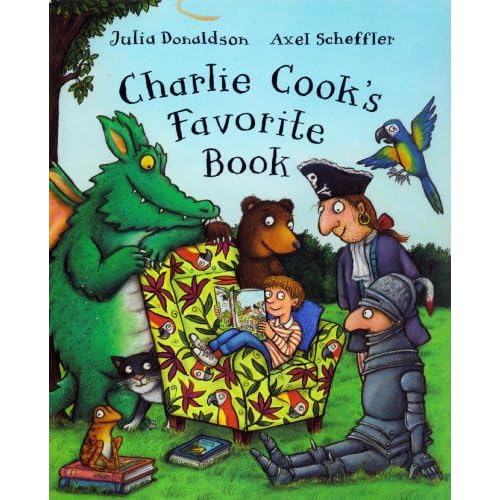
"Charlie Cooks Favorite Book", by Jula Donaldson. It's plot is basically a book inside a book inside a book, etc. and is written in a very playful, witty manner. The illustrations are quite clever and detailed. It's just a fun book to read.

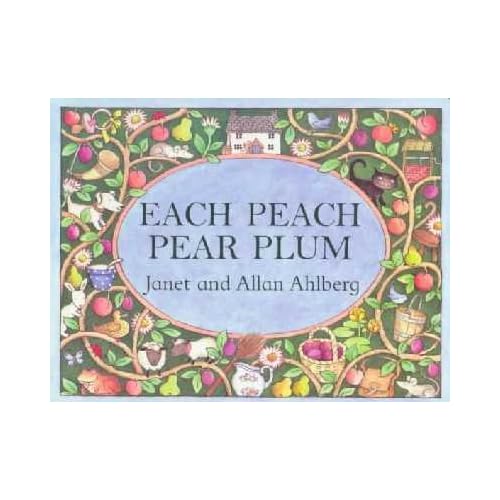
I first discovered "Each Peach Pear Plum", by Janet and Allan Ahlberg, at a friend's house in their book basket, and I immediately fell in love with it. This is an interactive book that links a bunch of familiar nursery rhymes together in a game of "I spy", with characters hiding out on each page. The illustrations are very whimsical and fun.

"Charlie Cooks Favorite Book", by Jula Donaldson. It's plot is basically a book inside a book inside a book, etc. and is written in a very playful, witty manner. The illustrations are quite clever and detailed. It's just a fun book to read.
I first discovered "Each Peach Pear Plum", by Janet and Allan Ahlberg, at a friend's house in their book basket, and I immediately fell in love with it. This is an interactive book that links a bunch of familiar nursery rhymes together in a game of "I spy", with characters hiding out on each page. The illustrations are very whimsical and fun.
Wednesday, April 21, 2010
Monsters on the Bookcase
Here are two books about monsters that we found through some library visits and enjoyed reading (and which I find very clever and fun):

"Dark Night" by Dorothee de Monfreid, is a cute story about how Felix, the little boy, escapes from some woods filled with ferocious beasts. (My son laughed so hard he lost his breath the first few times we read this!).
 "Leonardo the Terrible Monster" by Mo Willems, puts a spin on what it means to be a terrible monster.
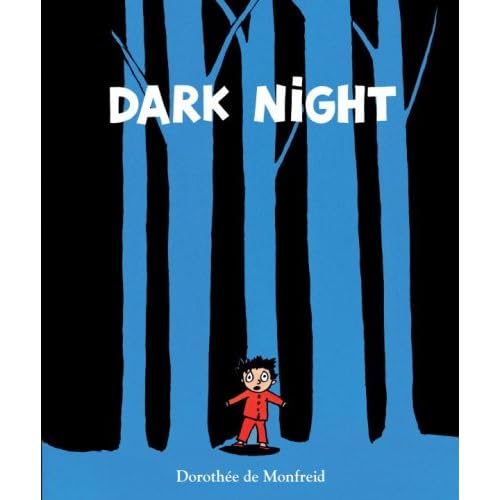
"Dark Night" by Dorothee de Monfreid, is a cute story about how Felix, the little boy, escapes from some woods filled with ferocious beasts. (My son laughed so hard he lost his breath the first few times we read this!).
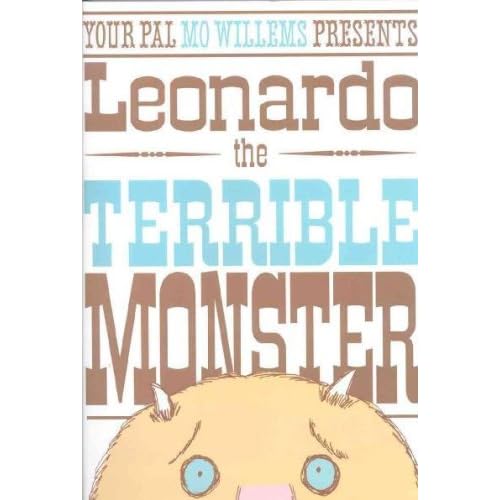 "Leonardo the Terrible Monster" by Mo Willems, puts a spin on what it means to be a terrible monster.
Monday, March 15, 2010
Cooking in the Kitchen with Dinah
This is one of my favorite character descriptions in "Uncle Tom's Cabin". It is about Dinah, a cook in a home owned by an man named Augustine St. Clare:
"Though her mode of doing everything was peculiarly meandering and circuitous, and without any sort of calculation as to time and place,-- though her kitchen generally looked as if it has been arranged by a hurricane blowing through it, and she had about as many places for each cooking utensil as there were days in the year,-- yet, if one would have patience to wait her own good time, up would come her dinner in perfect order, and in a style of preparation with which an epicure could find no fault."
Augustine St. Clare's defense of Dinah's methods:
"Now, there's Dinah gets you a capital dinner,-- soup, ragout, roast fowl, dessert, ice-creams and all,-- and she creates it all out of chaos and old night down there, in that kitchen. I think it really sublime, the way she manages. But, Heaven bless us! if we are to go down there, and view all the smoking and squatting about, and hurryscurryation of the preparatory process, we should never eat more! My good cousin, absolve yourself from that! It's more than a Catholic penance, and does no more good. You'll only lose your temper, and utterly confound Dinah. Let her go her own way."
"Though her mode of doing everything was peculiarly meandering and circuitous, and without any sort of calculation as to time and place,-- though her kitchen generally looked as if it has been arranged by a hurricane blowing through it, and she had about as many places for each cooking utensil as there were days in the year,-- yet, if one would have patience to wait her own good time, up would come her dinner in perfect order, and in a style of preparation with which an epicure could find no fault."
Augustine St. Clare's defense of Dinah's methods:
"Now, there's Dinah gets you a capital dinner,-- soup, ragout, roast fowl, dessert, ice-creams and all,-- and she creates it all out of chaos and old night down there, in that kitchen. I think it really sublime, the way she manages. But, Heaven bless us! if we are to go down there, and view all the smoking and squatting about, and hurryscurryation of the preparatory process, we should never eat more! My good cousin, absolve yourself from that! It's more than a Catholic penance, and does no more good. You'll only lose your temper, and utterly confound Dinah. Let her go her own way."
Wednesday, March 10, 2010
Uncle Tom's Cabin
I just recently finished reading "Uncle Tom's Cabin" by Harriet Beecher Stowe. This was my first time reading it- and I have to truthfully admit- watching the Siamese interpretation found in "The King and I" was the closest I'd ever been to reading it before! Sad, I know. I knew it was about slavery, but that's about it.
I was blown away. There are several gripping plots within the book, and not only is it a thorough illustration of slavery at the time (slave treatment, opinions/attitudes, etc.) but I was surprised to find that it is largely an inspiring and beautiful story of faith and hope in God. I highly recommend it. I'll be sharing quotes from it in the future, but here's one of my favorites:
"Ye said the Lord took sides against us, because he lets us be 'bused and knocked around; but ye see what come on his own Son,-- the blessed Lord of Glory,-- wan't he allays poor? and have we, any on us, yet come so low as he come? The Lord han't forgot us,-- I'm sartin' o' that ar'. If we suffer with him, we shall also reign, Scripture says; but if we deny Him, he also will deny us. Didn't they all suffer?-- the Lord and all his? It tells how they was stoned and sawn asunder, and wandered about in sheep-skins and goat-skins, and was destitute, afflicted, tormented. Sufferin' an't no reason to make us think the Lord's turned agin us; but jest the contrary, if only we hold on to him, and doesn't give up to sin." - Uncle Tom
I was blown away. There are several gripping plots within the book, and not only is it a thorough illustration of slavery at the time (slave treatment, opinions/attitudes, etc.) but I was surprised to find that it is largely an inspiring and beautiful story of faith and hope in God. I highly recommend it. I'll be sharing quotes from it in the future, but here's one of my favorites:
"Ye said the Lord took sides against us, because he lets us be 'bused and knocked around; but ye see what come on his own Son,-- the blessed Lord of Glory,-- wan't he allays poor? and have we, any on us, yet come so low as he come? The Lord han't forgot us,-- I'm sartin' o' that ar'. If we suffer with him, we shall also reign, Scripture says; but if we deny Him, he also will deny us. Didn't they all suffer?-- the Lord and all his? It tells how they was stoned and sawn asunder, and wandered about in sheep-skins and goat-skins, and was destitute, afflicted, tormented. Sufferin' an't no reason to make us think the Lord's turned agin us; but jest the contrary, if only we hold on to him, and doesn't give up to sin." - Uncle Tom
Wednesday, February 17, 2010
Standing Strong
"I will hold to the principles received by me when I was sane, and not mad- as I am now. Laws and principles are not for times when there is no temptation: they are for such moments as this, when body and soul rise in mutiny against their rigour; stringent are they; inviolate they shall be. If I at my individual convenience I might break them, what would be their worth?"
-"Jane Eyre", by Charlotte Bronte, 1847
-"Jane Eyre", by Charlotte Bronte, 1847
Thursday, October 8, 2009
Reading Resource
My son began to show a more serious interest in learning how to read at the beginning of the year. I had never pushed the issue, and waited for his lead on when to start the process. By that time, he was familiar with the letters of the alphabet and most of their sounds, but I wasn't sure where to go from there. When I asked around for other moms' advice on a good book to help teach your child to read, this book kept coming up.

So, I checked it out from the library to give it a little test drive. It does not have fancy illustrations (it looks more like a text book), and it takes a little preparation on your part to learn how to conduct the lessons, but my son seemed to enjoy it. It teaches the sounds of the letters, etc. so it's not necessary for your child to have any previous knowledge. I just wanted to throw it out there for you moms whose children might be approaching this new milestone. I had never heard of it before I started asking around.
(I understand after my son becomes more proficient at reading, that I will have the joy of hearing him sound out graffiti and expletives. I can't wait!)
Any other great resources out there?

So, I checked it out from the library to give it a little test drive. It does not have fancy illustrations (it looks more like a text book), and it takes a little preparation on your part to learn how to conduct the lessons, but my son seemed to enjoy it. It teaches the sounds of the letters, etc. so it's not necessary for your child to have any previous knowledge. I just wanted to throw it out there for you moms whose children might be approaching this new milestone. I had never heard of it before I started asking around.
(I understand after my son becomes more proficient at reading, that I will have the joy of hearing him sound out graffiti and expletives. I can't wait!)
Any other great resources out there?
Thursday, September 17, 2009
Parenting Resource
If you are looking for a down-to-earth, common sense resource on parenting and discipline, I highly recommend "John Rosemond's Six-Point Plan For Raising Happy, Healthy Children".
 Here's an excerpt from his introduction that kind of gives you a taste of where he's coming from:
"Over the last forty years or so, we've taken the very practical and commonsensical job of raising children, dressed it in fancy language, and turned it into something very abstract and, therefore, difficult. What the 'experts' haven't romanticized, sentimentalized, and idealized, they've scrutinized and analyzed to such an extent that we are no longer able to see the forest for all the obsessing we do over the trees.
"In the process, childrearing- or parenting, as it's now called- has been transformed into a pseudo-intellectual 'science,' something people think they must strain their brains at in order to do properly. But parenting is anything but an intellectual endeavor.
"... Parents who think too much tend to say things like, 'Raising a child is the hardest think I've ever done.' I understand. I used to feel that way myself. Then I stopped thinking so much about it, stopped obsessing over all the little details, stopped worrying about whether one wrong decision was going to ruin my children for life, and started paying at least as much attention to my own needs and the needs of my marriage as I did to my kids. That's when raising children became relatively easy and enjoyable."
I better stop there, or I might just transcribe the whole book for you!
Anyway, if you're in the neighborhood for a good parenting book, check this one out (like all books, you take what works for you and leave the rest). I especially like that his first point is to give more attention to your marriage than to your children.
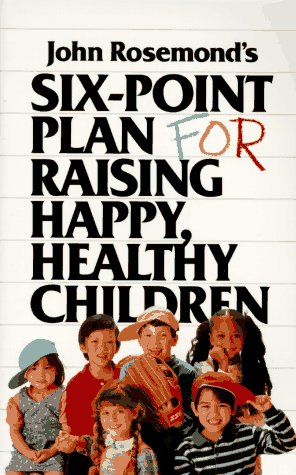 Here's an excerpt from his introduction that kind of gives you a taste of where he's coming from:
"Over the last forty years or so, we've taken the very practical and commonsensical job of raising children, dressed it in fancy language, and turned it into something very abstract and, therefore, difficult. What the 'experts' haven't romanticized, sentimentalized, and idealized, they've scrutinized and analyzed to such an extent that we are no longer able to see the forest for all the obsessing we do over the trees.
"In the process, childrearing- or parenting, as it's now called- has been transformed into a pseudo-intellectual 'science,' something people think they must strain their brains at in order to do properly. But parenting is anything but an intellectual endeavor.
"... Parents who think too much tend to say things like, 'Raising a child is the hardest think I've ever done.' I understand. I used to feel that way myself. Then I stopped thinking so much about it, stopped obsessing over all the little details, stopped worrying about whether one wrong decision was going to ruin my children for life, and started paying at least as much attention to my own needs and the needs of my marriage as I did to my kids. That's when raising children became relatively easy and enjoyable."
I better stop there, or I might just transcribe the whole book for you!
Anyway, if you're in the neighborhood for a good parenting book, check this one out (like all books, you take what works for you and leave the rest). I especially like that his first point is to give more attention to your marriage than to your children.
Saturday, September 5, 2009
A Lion and a Lamb

I just finished reading "A Lion and a Lamb" by Rand H. Packer. It is about Willard and Rebecca Bean, newlyweds who were the first missionaries to return to Palmyra after the Saints left. What originally was supposed to be a 5 year mission turned into a 24 year mission! It is an excellent book. Their main obstacle to overcome was the large anti-Mormon sentiment that the community had, and it is amazing to read how this was accomplished.
Three things stand out in my mind since finishing it. One, is how the Lord uses each of our unique personalities and abilities to accomplish his work. Willard was a former prizefighter, and therefore had a strong, fighting temperament. And yet he was still very Christlike and friendly. The Lord will make us mighty with what we have to offer. We don't have to try and be someone else. Second, is a quote from Willard in talking with a Methodist minister: "I have always felt that just because people believe differently, it doesn't need to make them enemies." Willard became a great friend to many in the community who were of other religions, and he was very respectful of their differences. Sometimes different beliefs can be such an obstacle to friendship, when it doesn't have to be. Third, is Rebecca Bean's patience with the people in the community. While she and her children experienced exclusion and hatred, she did not blame the people. She understood that they were trying to do what was right, based on the lies about Mormons that they had been taught. She knew in time, things would change.
Anyway, it's a great book. Willard gives some simple and beautiful explanations of the Gospel. The Beans lived in the Smith home during their mission, and I loved imagining what it would be like to live there. Their family would often frequent the Sacred Grove and visit the Hill Cumorah. What an opportunity!
Tuesday, July 21, 2009
Beware of Treacherous Villains
I found this advice at the end of "One Hundred and One Famous Poems", copyright 1929:
"In choosing books for children these rules, recently laid down by an author of books for boys, are worth the consideration of parents:
'Read your children's books yourself. Or better still, get your boy or girl to read them aloud to you. Ask yourself during the reading:
'Does this book lay stress on villainy, deception or treachery?'
'Are all the incidents wholesome, probable and true to life?'
'Does it show young people contemptuous toward their elders and successfully opposing them?'
'Do the young characters in the book show respect for teachers and others in authority?'
'Are these characters the kind of young people you wish your children to associate with?'
'Does the book speak of and describe pranks, practical jokes and pieces of thoughtless and cruel mischief as though they were funny and worthy of imitation?'
'Is the English good and is the story written in good style?'"
I have to admit, at first I was amused by this article because of its use of words like villainy, treachery, and cruel mischief (I don't think we use those words enough these days!).
I had never considered editing books with the influence or example of the main character in mind. Would there be any good children's books left to read if we lived by this criteria? What about Peter Rabbit or Curious George? (As a side note: I can't figure out why the man with the yellow hat continually trusts George in potentially precarious situations over and over again. When will he ever learn?). And does a book being "true to life" eliminate the whole fiction section of the library?
I have been very protective about which movies to share with my child, and as parents, we are very conscientious about movie ratings and so forth. But books? They seem so.... harmless.
If anything, this was a reminder to me that I should be aware of what influences I allow my child to be exposed to, no matter what type of media.
"In choosing books for children these rules, recently laid down by an author of books for boys, are worth the consideration of parents:
'Read your children's books yourself. Or better still, get your boy or girl to read them aloud to you. Ask yourself during the reading:
'Does this book lay stress on villainy, deception or treachery?'
'Are all the incidents wholesome, probable and true to life?'
'Does it show young people contemptuous toward their elders and successfully opposing them?'
'Do the young characters in the book show respect for teachers and others in authority?'
'Are these characters the kind of young people you wish your children to associate with?'
'Does the book speak of and describe pranks, practical jokes and pieces of thoughtless and cruel mischief as though they were funny and worthy of imitation?'
'Is the English good and is the story written in good style?'"
I have to admit, at first I was amused by this article because of its use of words like villainy, treachery, and cruel mischief (I don't think we use those words enough these days!).
I had never considered editing books with the influence or example of the main character in mind. Would there be any good children's books left to read if we lived by this criteria? What about Peter Rabbit or Curious George? (As a side note: I can't figure out why the man with the yellow hat continually trusts George in potentially precarious situations over and over again. When will he ever learn?). And does a book being "true to life" eliminate the whole fiction section of the library?
I have been very protective about which movies to share with my child, and as parents, we are very conscientious about movie ratings and so forth. But books? They seem so.... harmless.
If anything, this was a reminder to me that I should be aware of what influences I allow my child to be exposed to, no matter what type of media.
Subscribe to:
Posts (Atom)